
Garbage bin box material comparison: Which is the best?
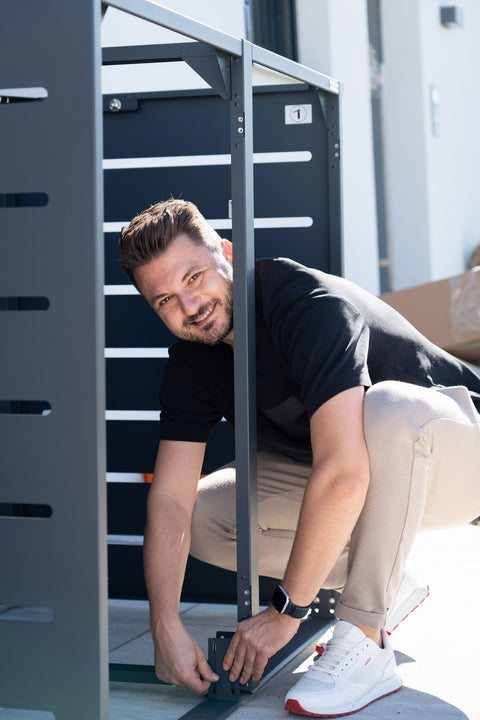

In short: For most households, hot-dip galvanized steel with powder coating is the best choice because it is robust, maintenance-free, and durable. Hot-dip galvanizing protects steel from corrosion maintenance-free for 50 years or more, depending on exposure (Hot-Dip Galvanizing Industry Association). Aluminum scores for its weight, real wood for its appearance but requires some care. Plastic, concrete, and stone each have significant disadvantages, from brittleness to heavy weight.
Which material is best suited for a garbage bin box?
The best choice is coated metal, especially hot-dip galvanized steel. It combines stability, weather resistance, and low maintenance effort, which no other material offers in this combination. Aluminum, wood, and plastic each have their strengths but also clear weaknesses.
Which material really suits you depends on three questions: How much maintenance do you want to invest? How important is the appearance to you? And where will the box be placed — in direct sunlight, against the house wall, or freely in the garden? These are exactly the points where the materials differ the most. Let’s look at them one by one.
A good garbage bin box should stand outside for many years without rusting, graying, or warping. The material determines this more than any other detail. In our garbage bin box overview, you’ll find all models sorted by material.
Steel and metal: the durable all-rounder
Hot-dip galvanized steel is the most durable material for garbage bin boxes and lasts the longest. According to the Hot-Dip Galvanizing Industry Association, hot-dip galvanizing protects steel from corrosion maintenance-free for 50 years or more, depending on atmospheric exposure. An additional powder coating makes the surface scratch-resistant, UV-resistant, and colorfast.
The big advantage: you practically don’t have to do anything. No painting, no oiling, no aftercare. Pests, moss, and moisture cannot harm the coated steel. That’s exactly why our garbage bin boxes made of metal are by far the most popular choice among homeowners.
At BIO Stefan, the lines Stahlfred and Dagobert rely on this construction method. Stahlfred is the sturdy steel variant with height-adjustable feet, while Dagobert can also be greened with a plant roof. We explain in detail why hot-dip galvanizing provides such reliable protection in the article on hot-dip galvanizing for garbage bin enclosures.

Aluminum: light, rust-free, and easy to move
Aluminum is the right material when it needs to be light. It weighs significantly less than steel, does not rust, and is therefore easier to move or transport. It also has a strong ecological argument: aluminum can be almost completely recycled without quality loss, saving significant amounts of energy compared to new production from bauxite (Federal Environment Agency).
Pure aluminum is, however, softer than steel and thus somewhat more sensitive to dents. High-quality boxes solve this cleverly: In our Alubert line, the powder-coated aluminum sits on a sturdy frame, and all moving parts like hinges and gas springs are made of corrosion-resistant stainless steel. This keeps the box light but still torsion-resistant.
Who benefits from aluminum? Especially if you want to move the box occasionally or live near the coast where salty air attacks metal more strongly. Aluminum is as low-maintenance as coated steel.

Wood and wood look: warm in appearance but requires care
Wood looks warmest and most natural but requires the most care in return. Real wood works, grays over time, and must be regularly oiled or glazed outdoors to stay beautiful. If you want to avoid this effort, a wood look on metal is often a better choice.
In the Holzmichl line, we combine both: real spruce wood boards in a hot-dip galvanized, powder-coated steel frame. The frame remains maintenance-free, the wood front only needs care once or twice a year and can be individually painted or replaced if needed. This is the compromise between natural look and everyday practicality.
Are there boxes that look like wood but require no maintenance? Yes. Several of our metal models are available with a wood-look front that visually resembles wood but can be maintained like coated metal, meaning practically no maintenance. You can find a direct comparison of natural materials in the guide Wood or Plastic for the Garbage Bin Box.

Plastic, concrete, and stone: Why they are rarely the best choice
Plastic, concrete, and stone may seem cheap or particularly solid at first glance but have noticeable disadvantages in everyday use. Plastic boxes are light and inexpensive but become brittle under UV radiation. After a few summers, they often crack, fade, and warp in heat. They don’t reach the stability and quality of metal.
Concrete and stone are extremely heavy. A garbage bin box made of concrete can weigh several hundred kilograms depending on size, making transport, setup, and later moving almost impossible. Cracks from frost and limited color options add to that. For most gardens, this is simply too inflexible.
Our practical tip: If you like the look of stone or the low purchase price of plastic, check out the powder-coated metal boxes first. You get the desired color, significantly more durability, and avoid the hassle of warped plastic or immovable concrete.
Material comparison at a glance
The following table summarizes the most important properties. This way, you can see at a glance which material leads in durability, care, weight, and appearance.
| Material | Durability | Maintenance effort | Weight | Appearance |
|---|---|---|---|---|
| Hot-dip galvanized steel | Very high | None | High | Modern, many colors |
| Aluminum | Very high | None | Low | Modern, many colors |
| Real wood | Medium | High (oiling/varnishing) | Medium | Very natural, warm |
| Wood look on metal | Very high | None | High | Wood-like, maintenance-free |
| Plastic | Low | Low | Very low | Simple, fades |
| Concrete/stone | High | Low | Very high | Solid, inflexible |
In short: coated metal wins in almost every category. Wood only catches up in appearance but costs you maintenance time. Plastic, concrete, and stone remain niche solutions.
What to consider when choosing the material
Besides the material, workmanship determines quality. Pay attention to the sheet metal thickness, a continuous powder coating, and high-quality fittings like stainless steel hinges and gas pressure dampers. These details decide whether a box still closes quietly and cleanly after years or starts rattling.
Before buying, ask yourself these questions: Should the box be maintenance-free, or can it get some care? Do you need it to be easy to move, or can it be heavy and stable? And does the color match your house and garden? Thoughtful garbage bin box care keeps any material looking good longer, but with metal, it’s practically optional.
One last point many underestimate: high-quality accessories should still be available for purchase years later. For a durable box made of metal, this is worthwhile because the basic structure will accompany you for decades.
Frequently Asked Questions
Which material is best for a garbage bin box?
Hot-dip galvanized steel with powder coating is considered the best material because it is robust, weather-resistant, and maintenance-free. The hot-dip galvanizing protects the steel from corrosion for 50 years and more depending on the load (Industrial Association Hot-Dip Galvanizing). Aluminum is the lighter, also very durable alternative.
Which metal is best suited for garbage bin boxes?
Both hot-dip galvanized steel and aluminum are excellent choices. Steel is heavier, very stable, and especially sturdy. Aluminum is light, rust-free, and easy to move. Both are practically maintenance-free with powder coating. The choice depends on whether stability or low weight is more important to you.
Is a garbage bin box made of wood a good idea?
Wood looks natural and high-quality but requires regular outdoor maintenance such as oiling or glazing. A good solution is real wood in a maintenance-free steel frame, like in the Holzmichl line. This way, you get the warm look without having to maintain the entire box.
How much does a concrete garbage bin box weigh?
A garbage bin box made of concrete can weigh several hundred kilograms depending on the size. This high weight makes transport and installation difficult and later repositioning almost impossible. For most households, lighter and more flexible materials like coated metal are the more practical choice.
Is there a Stiftung Warentest comparison for garbage bin boxes?
There is no official Stiftung Warentest test specifically for garbage bin boxes yet. Therefore, rely on objective quality features: hot-dip galvanized metal, continuous powder coating, sufficient material thickness, and stainless steel fittings are reliable indicators of a durable box.
Conclusion: How to find the right material
- Maintenance-free and durable: hot-dip galvanized steel is the best choice for most households.
- Lightweight and rust-free: Aluminum is suitable if you want to move the box or live near the coast.
- Natural look: real wood in a steel frame combines the wood look with low maintenance.
Which material you ultimately choose is also a matter of taste. If you're unsure, compare the models in the garbage bin box overview or visit the showroom in Leonding near Linz. There you can touch steel, aluminum, and wood side by side and immediately see which material feels right for you.
---
*Last updated: June 21, 2026 by Erwin Sabic, BIO Stefan. Practical knowledge from the showroom in Leonding near Linz.*





